AI Powered Artwork Generation
Designing an AI-Powered System for Scalable Artwork Generation
Reducing manual effort in frame selection and multi-format asset creation across thousands of media files.
COMPANY
Amagi
ROLE
Lead UX Designer
EXPERTISE
Design & strategy
YEAR
2025
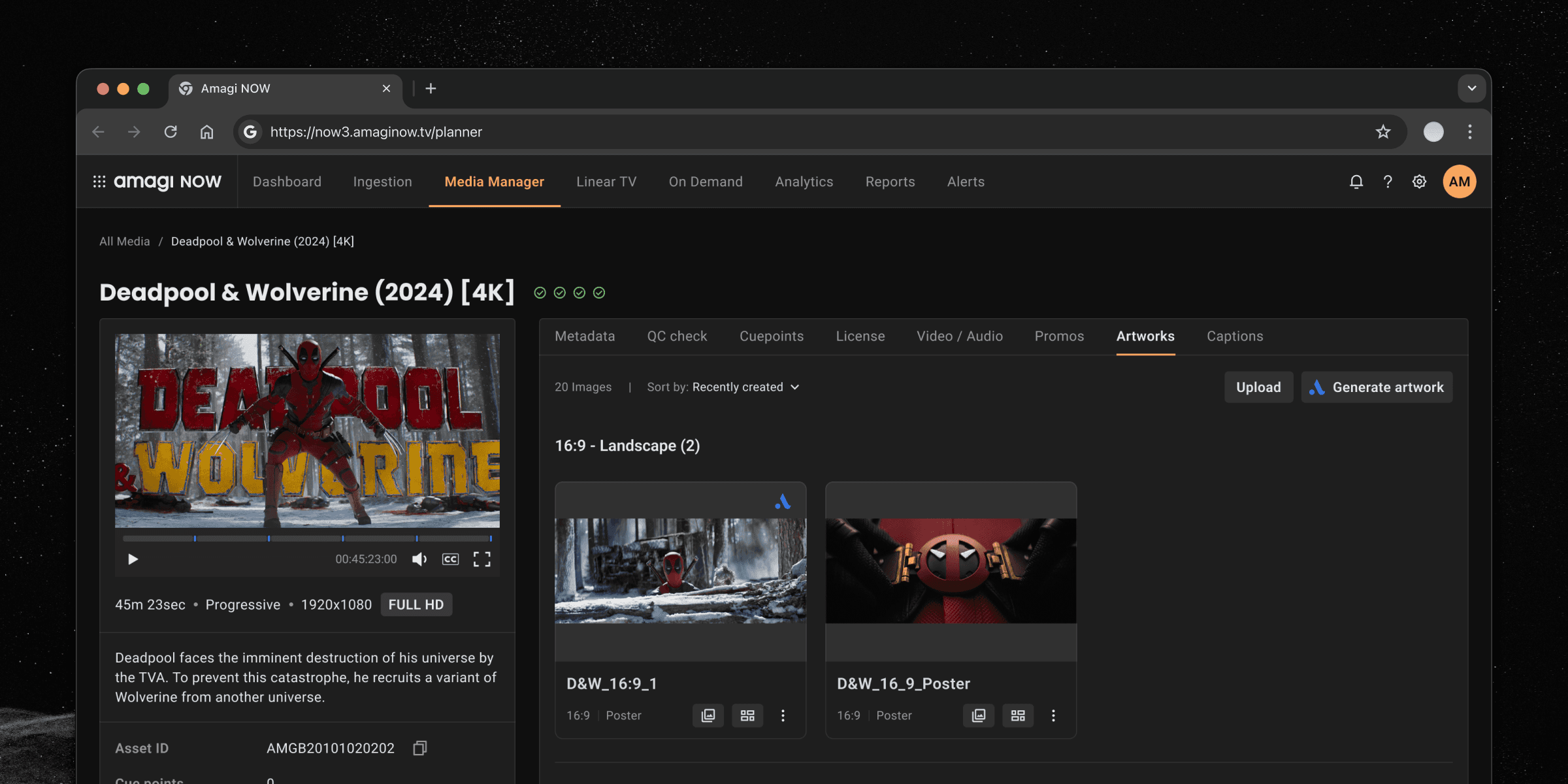
Description
As media companies scale content distribution across FAST, OTT, and social platforms, generating platform-ready artwork became a key bottleneck. We chose artwork generation as the starting point for Amagi’s AI enrichment journey—given its high volume, design complexity, and manual effort.
“ The editing is fast. The artwork delays everything. ”
This project was the foundation of Amagi’s broader AI initiative, aimed at automating creative and operational workflows across the media lifecycle.
The Problem
At scale, artwork generation for media assets breaks down due to two major bottlenecks:
Frame selection from long-form video:
Editors were spending significant time scrubbing through hours of video to identify frames that visually represent the content. For media libraries with thousands of assets, this process was not only time-consuming, but cognitively taxing and inconsistent across users.Rigid source formats and multi-platform requirements:
Most content providers supplied only 1–2 high-quality images per asset—typically in a standard 1920×1080 format. These had to be manually cropped and resized into multiple aspect ratios (1:1, 9:16, 4:3) for social media, EPGs, and OTT platforms. This transformation effort was repetitive, tedious, and often required external tools or vendor support.
My Role
As the lead designer, I owned the end-to-end design—from vision and UX strategy to research, prototyping, stakeholder alignment, and testing with key partners.
Why Artwork First?
Artwork was the most measurable, high-volume creative problem we could target to validate our AI direction with minimal risk. It had immediate visual impact, consistent inputs (media assets), and required minimal client-side training.
People Impacted (Users)
Content Editors
Needed speed and AI
assistance.
Creative Directors
Required control over branding and visuals.
Marketing Teams
Demanded platform-formatted, promo-ready images.
Platform Admins
Sought automation, auditability, and delivery reliability.
Process
To bring this vision to life, we followed a fast-paced but research-informed design process. We began with internal audits and interviews to understand bottlenecks, then rapidly mapped out a modular workflow aligned with user roles. Given tight timelines, we scoped a focused MVP while ensuring flexibility for future evolution. Feedback from strategic partners was incorporated iteratively, balancing automation with editorial control.
Design Goals
Help teams generate artwork quickly without compromising brand quality.
Automate repetitive decisions (frame choice, crop formats, overlay placement).
Ensure brand consistency across platforms and reduce vendor costs.
Constraints
Engineering bandwidth was limited.
We needed to ship an MVP in <8 weeks.
Had to integrate into Amagi NOW’s existing media management UI.
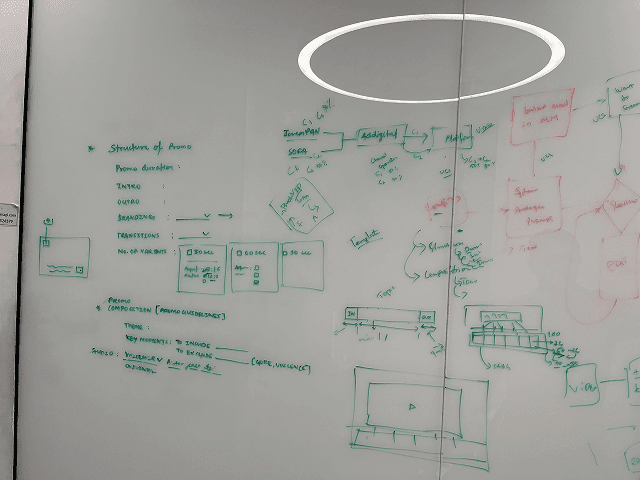
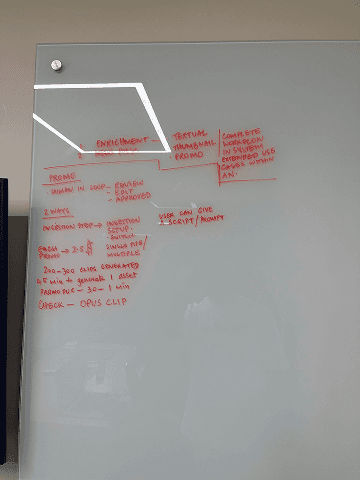
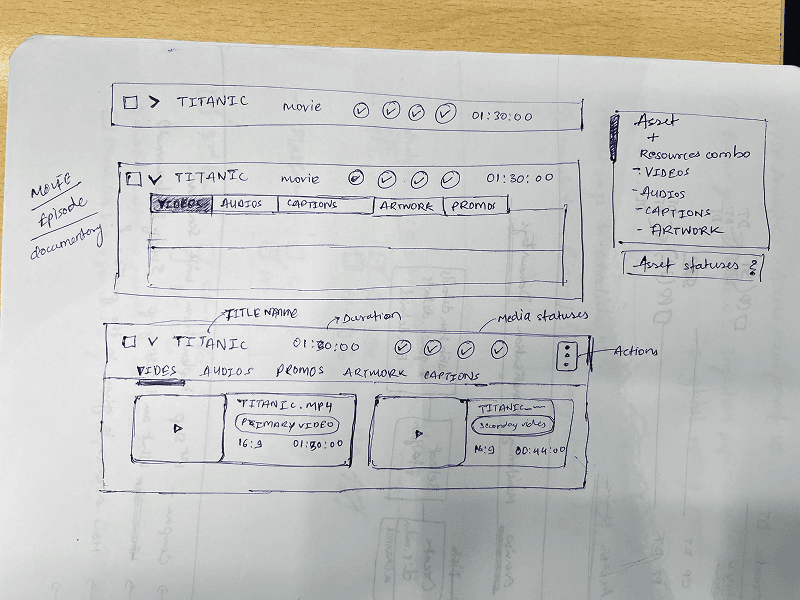
Ideation & Explorations
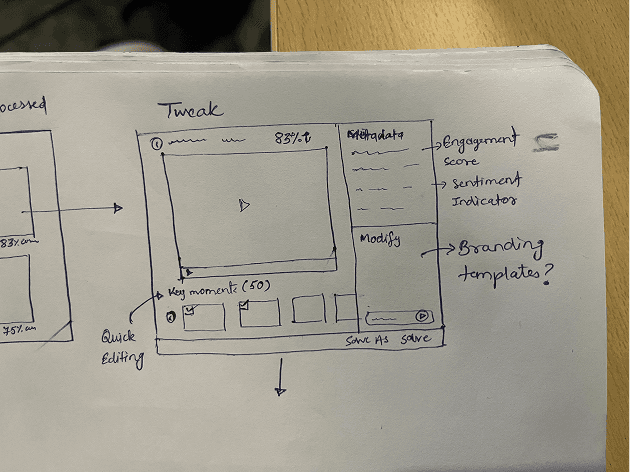
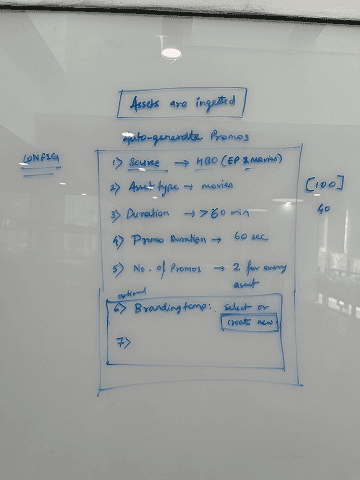
Research & Discovery
We conducted internal audits and interviewed editors, marketers, and platform leads to uncover bottlenecks. Recurring themes included:
Missed deadlines due to artwork delays
High vendor spend
Manual rework across formats and platforms
Key Design Principles
Editorial Control: AI suggests, humans approve.
Speed over Styling: Prioritize turnaround time and operational readiness.
Format Flexibility: 16:9, 1:1, 9:16 defaults, with override options.
Key Decisions
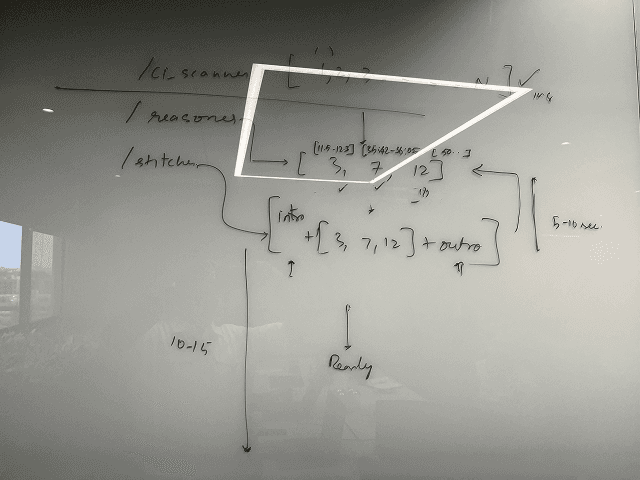
Ship a minimal but complete flow (extract → review → enrich → save).
Allow easy override of AI choices to build user trust.
Postpone generative visuals to focus on formatting and consistency.
Solution
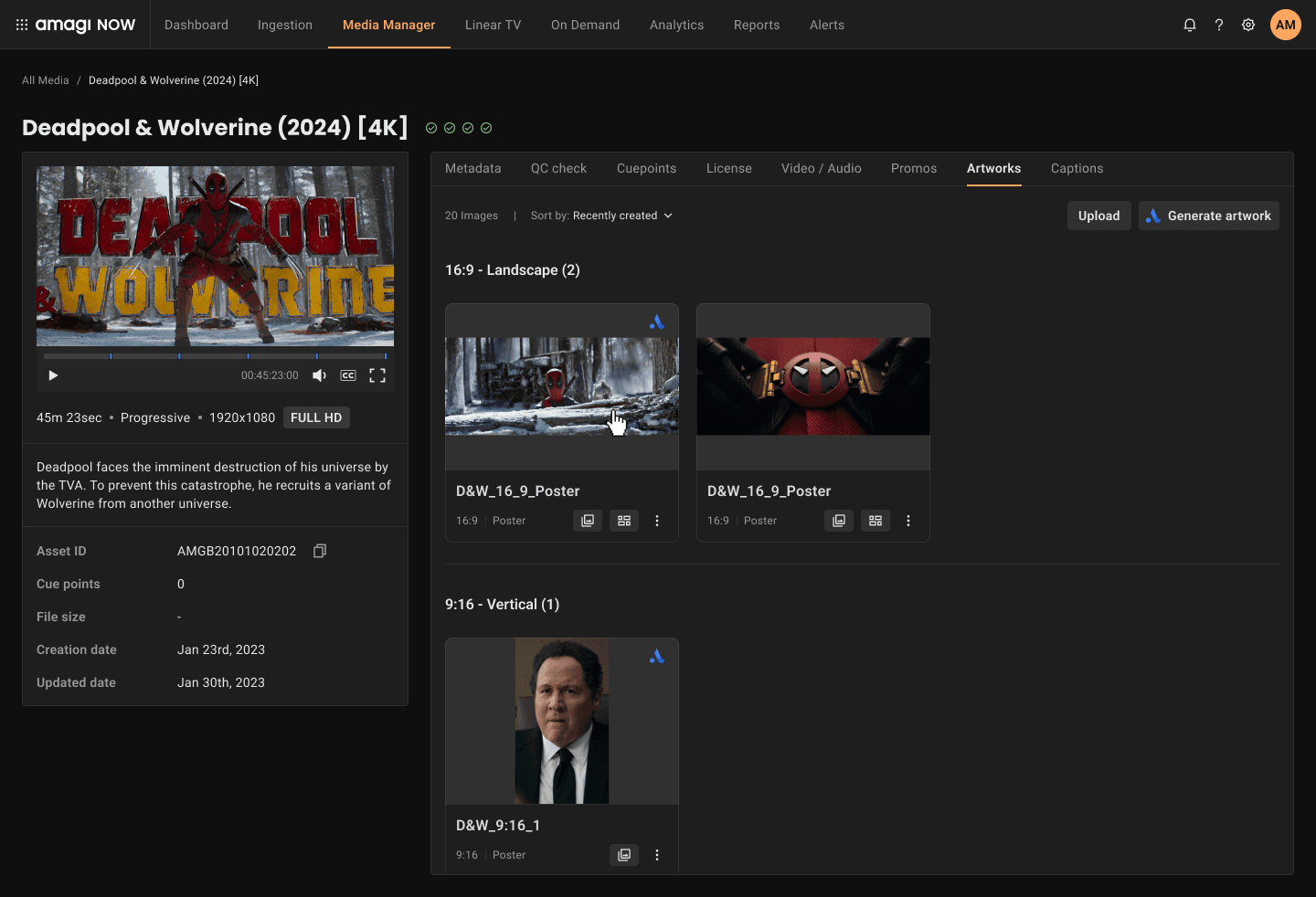
MVP Workflow
Extract:
AI detects highlight frames using speech, timecodes, and metadata.Review:
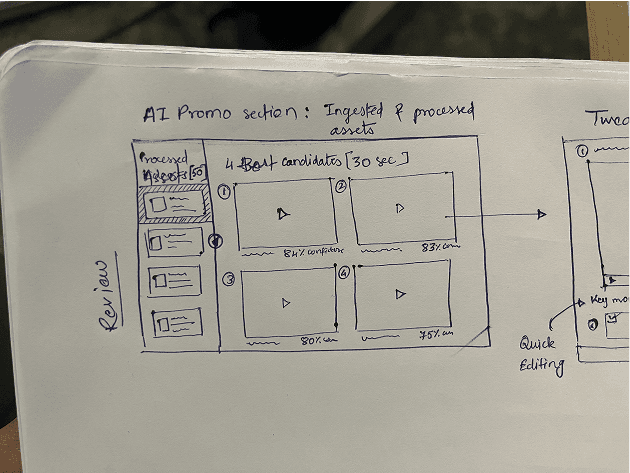
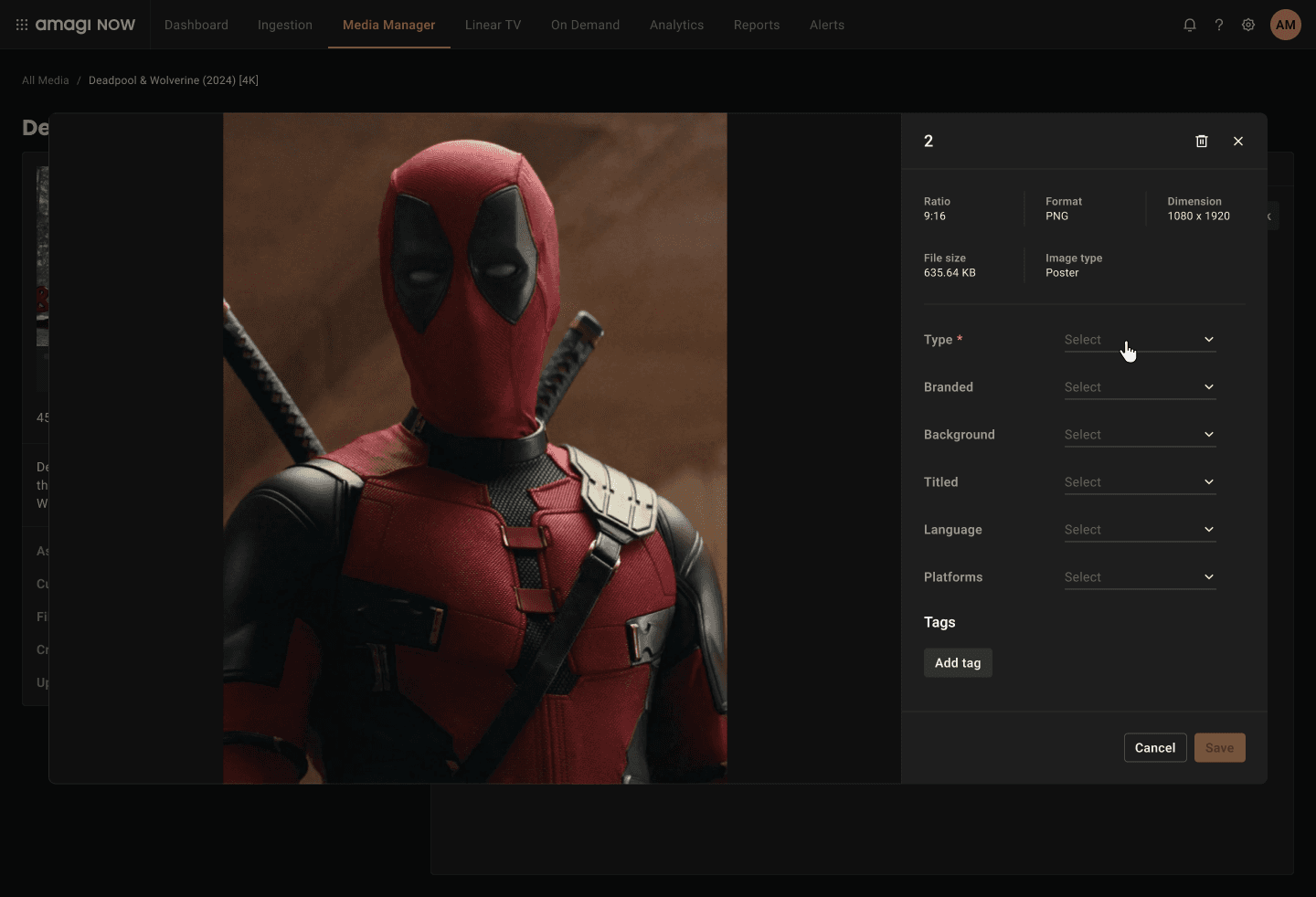
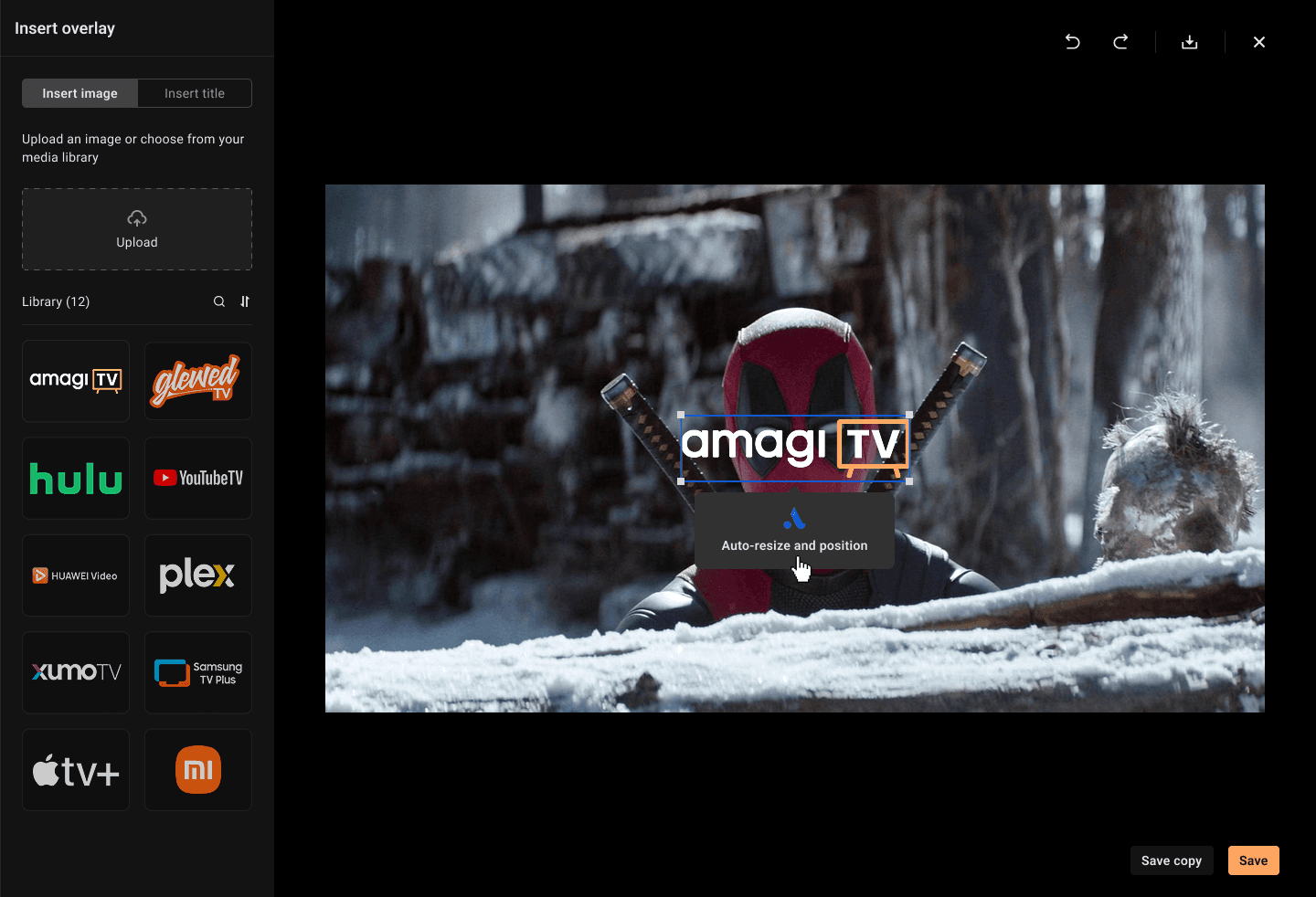
Editors see top 3–5 frames with confidence scores and preview toggles.Enrich:
Auto-apply branded templates and preview multiple aspect ratios (16:9, 9:16, 1:1).Save:
Final images are versioned and stored under each asset.
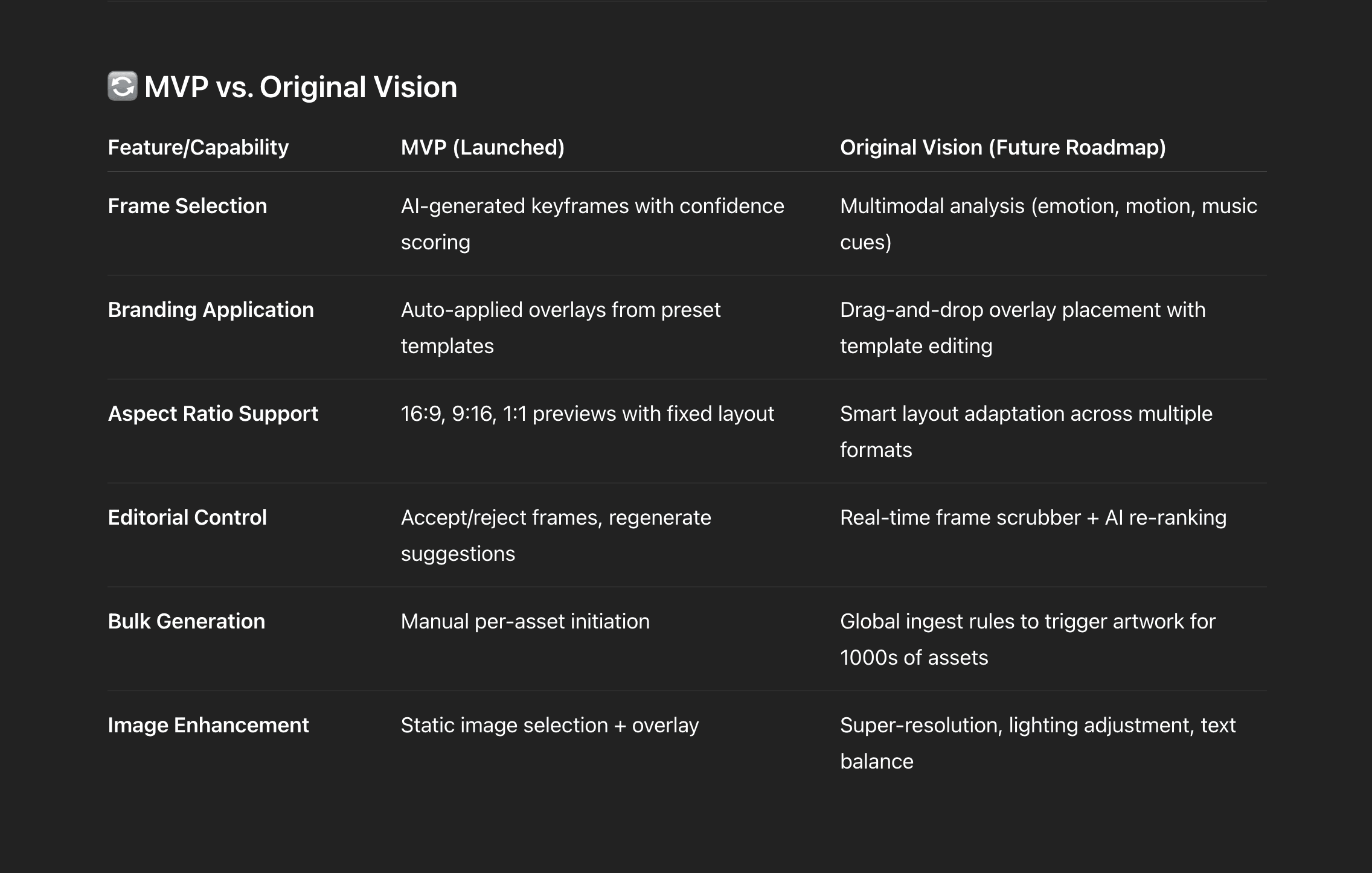
User Interactions
Drag-to-place overlay elements
Instant aspect ratio toggles
Regenerate frame suggestions
Branding templates applied automatically
Each UI decision was made to reduce friction and shorten the feedback loop for editors—from generation to final approval.
What’s Coming Next
Global settings for bulk image generation.
Layout intelligence for vertical content.
AI enrichment expansion to promos and metadata.
Prototype
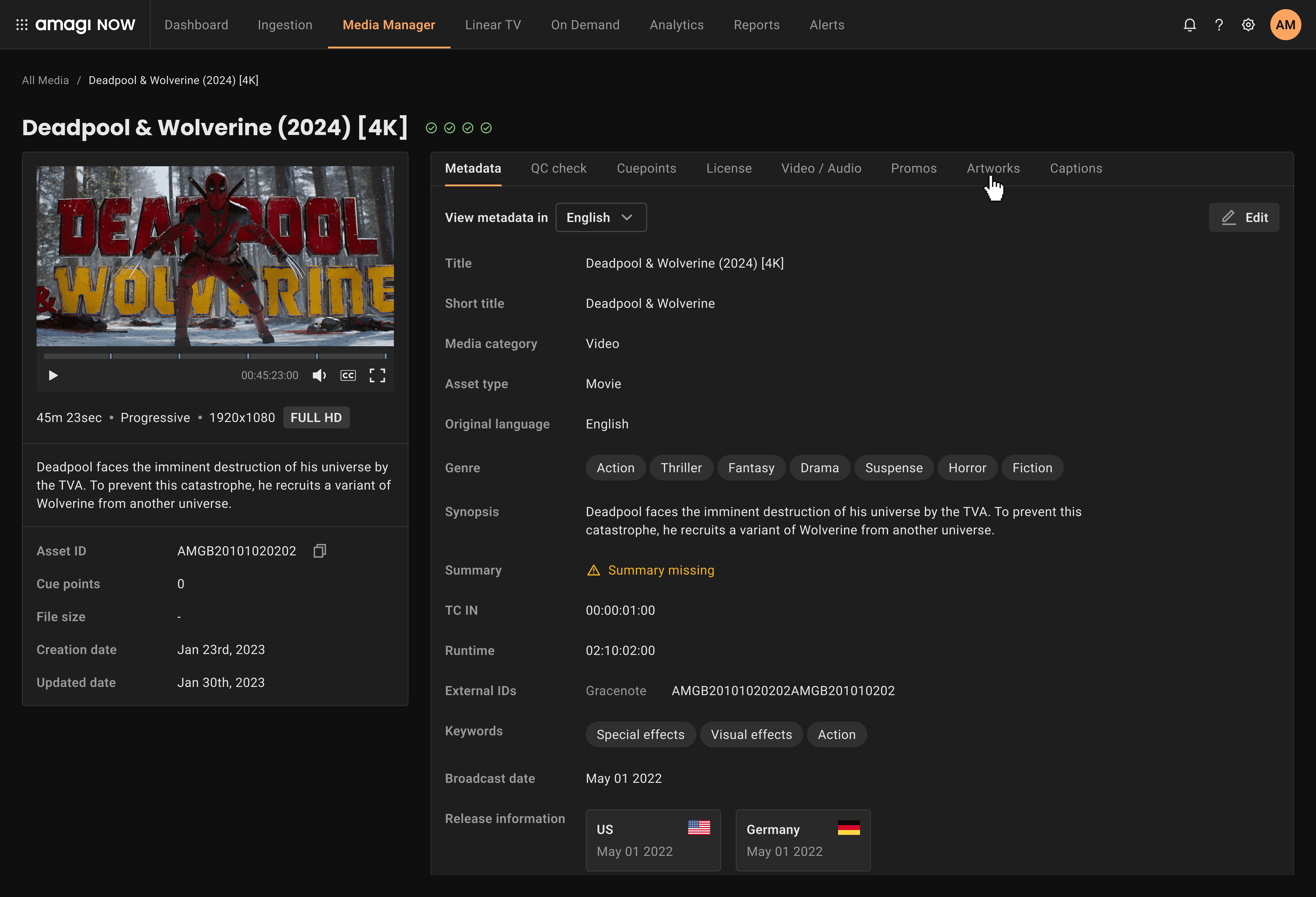
Results
We’re currently piloting the MVP with early clients and OTT studio partners.
While metrics are still being collected, early feedback signals are strong:
✅ Reduced dependency on external vendors
✅ Faster internal artwork turnaround
✅ Higher visual consistency across platforms
What Clients Care About Most
Cost savings (via vendor reduction)
Time savings (less manual creative effort)
Workflow clarity and ease-of-use
“ This was the first time AI felt like a creative ally—not a threat. ”
This project earned trust with editors and unlocked roadmap buy-in for extending AI into promo generation, metadata enrichment, and smart scheduling.